Saudi Arabia has most recently announced a new regulation granting foreign investors limited access to the real estate sector in Mecca and Medina as part of its Vision 2030, The decision allows foreign investors to invest in real estate in the two cities through publicly listed companies. However, under this regulation, the rate of foreign ownership in investee companies is limited to 49% and strategic investors are excluded.
The kingdom’s Capital Market Authority (CMA) announced in January that foreign investors will be able to buy shares and convertible debt instruments in companies listed on the Saudi stock exchange that own real estate in Mecca and Medina. The cities, which was previously open only to Muslims as they are regarded as holy cities according to Islam, is now accessible to global investors within certain limits. This decision has, therefore, added a new dimension to economic competition in the Gulf.
What led to this decision?
The decision aligns with Saudi Arabia’s goal of reducing its dependence on oil revenues while diversifying its economy. As part of the Vision 2030, Riyadh is implementing policies designed to make the real estate, finance, and tourism sectors attractive to global investors. The decisions taken by the CMA are among the direct results of this vision. Additionally, the consistently high projections of the number of Umrah and Hajj pilgrims in Mecca and Medina have influenced the Saudi government’s moves.
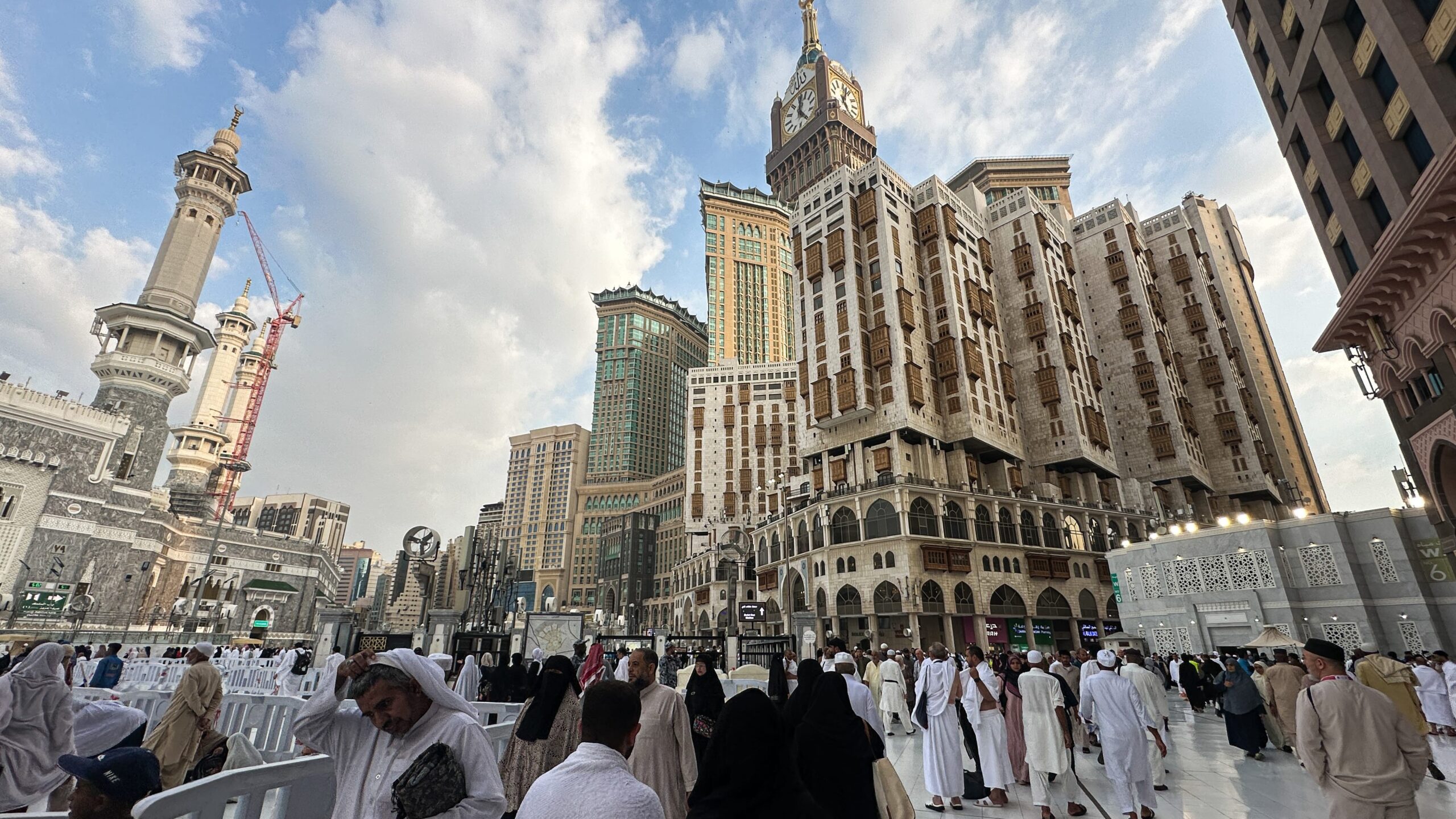
Both cities host millions of visitors annually for Hajj and Umrah pilgrims. The country plans to welcome 30 million pilgrims each year as part of its 2030 vision. These forecasts call for large-scale investments in hotel, residential and commercial real estate projects. The Saudi government recognizes that local capital alone cannot finance these projects. As a result, it seeks to boost capital inflows and accelerate infrastructure projects by integrating international investors into the process. Attracting foreign investors to the Saudi stock market will increase market liquidity and allow local companies to appreciate in value.
The kingdom’s move will not only have a direct impact on the real estate sector but it will also affect Saudi financial markets. First, foreign investors’ interest in the Saudi stock market will drive up stock values and enhance market liquidity. In addition, the introduction of Real Estate Investment Trusts (REITs) will allow for a more orderly and controlled integration of international capital into the Saudi market. This system allows investors to earn through revenue sharing rather than direct property ownership. By limiting foreign ownership in the stock market to 49%, the Saudi government aims to attract investors without losing strategic control over the country. However, the possibility of expanding this limit in the coming years should not be ruled out.
Transformation of Mecca and Medina
The transformation of Mecca and Medina into a global investment area centered around faith tourism through Hajj and Umrah visits cannot be viewed as a purely economic process. Since these cities are the religious centers of the Islamic world, Saudi Arabia seeks to retain control of them., Their ownership supports Saudi Arabia’s claim to regional leadership, albeit on religious grounds. It is important to remember that one of the three main objectives of the Vision 2030 was to preserve the religious motives behind Saudi Arabia’s pursuit of such leadership. In this context, the entry of foreign capital into this field will inevitably bring religious and political controversies. While the Saudi leadership seeks to attract international capital, it should carefully manage how this process will have an impact on the broader Islamic world.
Another reason for the government to encourage these investments is the need to strengthen the physical infrastructure of Mecca and Medina. These cities, which host millions of visitors each year, require a major transformation in terms of accommodation, transportation and healthcare infrastructure. Funding from foreign investors will help accelerate the completion of the existing and upcoming projects.
Regional, global implications
The recent move will not only affect the economy policy of Saudi Arabia. Regional rivals such as the United Arab Emirates (UAE) and Qatar have long pursued aggressive policies to attract global capital. Saudi Arabia’s decision to make the two prestigious cities more attractive to investors will take the existing competition in the Gulf along the Riyadh-Dubai-Doha axis to the next level.
In particular, the reactions of countries like the UAE and Qatar to Saudi Arabia’s financial expansion are crucial. Dubai, in particular, has been regarded as a model for economic diversification in the Gulf, successfully reducing its reliance on hydrocarbon resources as they near depletion. The emirate has implemented policies to strengthen its non-oil sectors, ensuring sustainable growth beyond oil revenues.
As a result, Dubai has remained one of the most attractive financial centers for international investors in the Gulf region until now. Riyadh government has already shown its intention to surpass Dubai’s advantage to become a leading financial hub with the decisions it took in previous years. The Kingdom has already made decisions, including withholding public tenders from international conglomerates and entities that have not relocated their regional headquarters to the country. The latest move regarding the investments in Mecca and Medina will add an important economic dimension to the competition in the Riyadh-Dubai axis.
Accordingly, the limited opening of markets to foreign investors in Mecca and Madinah will mark a critical stage in Saudi Arabia’s economic transformation. This move aims to reduce the country’s dependence on oil for revenues, expand financial markets, and turn Hajj and Umrah tourism into a larger investment opportunity. However, this process is likely to cause significant religious, political and economic disruptions in the Gulf balance. The Saudi government is aware of this and will continue to maintain its control over the holy cities while seeking to attract international investors.